The Artemis II astronauts are on a course back to Earth after flying by the moon Monday, witnessing a solar eclipse, and breaking a distance record set by NASA's Apollo 13 astronauts.
The astronauts on Artemis II will observe parts of the moon rarely seen by human eyes. A NASA planetary scientist said it will offer a vital perspective for lunar research.
Many of the photos that have come out of the moon mission so far were taken by crew members. NASA says the crew is getting guidance from scientists on what to capture when they get closer to the moon.
In shaking up its Artemis lunar program, NASA's new moon plan looks more like the Apollo missions of the 1960s. Instead of landing on the surface on Artemis III, NASA hopes to do so on Artemis IV.
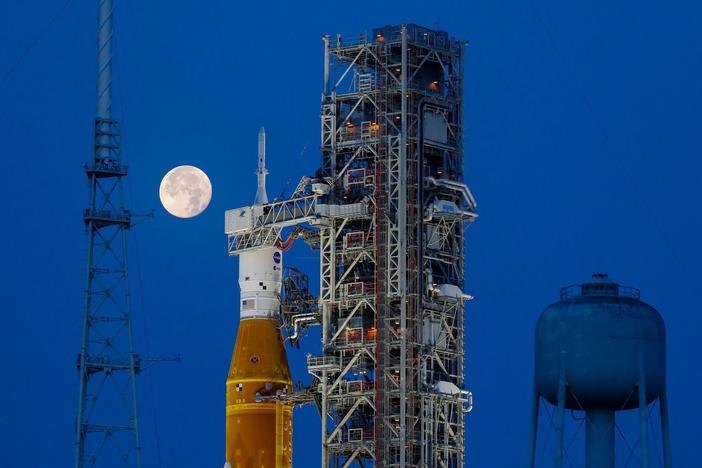
NASA says an "interrupted flow" of helium to the rocket system could require a rollback to the Vehicle Assembly Building. If it happens, NASA says the launch to the moon would be delayed until April.
The four astronauts heading to the moon for the lunar fly-by are the first humans to venture there since 1972. The ten-day mission will travel more than 600,000 miles.
The space agency's long-awaited Artemis I mission will have to wait until at least Friday, after a problem with one of the SLS rocket's engines was discovered.
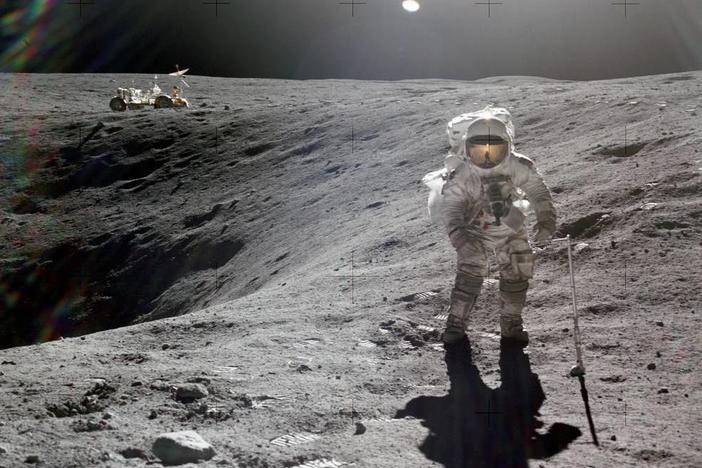
NASA's Apollo missions already sent astronauts to the moon from 1969 to 1972. But scientists say there's still lots of good science to do there. The moon also could be an ideal stepping stone to Mars.
Researchers say high tide flooding in U.S. coastal regions will become more frequent in the mid-2030s because of climate change, amplified by a routine wobble in the moon's orbit.