Early in life, the protein Reelin helps assemble the brain. Later on, it appears to protect the organ from Alzheimer’s and other threats to memory and thinking.
A severe traumatic brain injury can make it hard to remember recent events or conversations. But a form of brain stimulation appears to ease this memory deficit.
The Food and Drug Administration is expected to grant full approval to the Alzheimer's drug lecanemab by July 6. But access to the drug may still be limited.
Scientists have shown that deep brain stimulation during sleep can help people retain new information. The approach could help people with memory problems related to disorders like Alzheimer's.
An Alzheimer's drug that removes the substance amyloid from the brain has received a conditional approval from the FDA. A large study found the drug decreased the loss of thinking and memory by 27%.
In a large study, the experimental Alzheimer's drug lecanemab reduced the rate of cognitive decline by 27 percent in people in the early stages of the disease.
Mild cognitive impairment, a common brain condition, can be an early sign of Alzheimer's disease. But most people don't know the symptoms. And some may mistake it for normal aging.
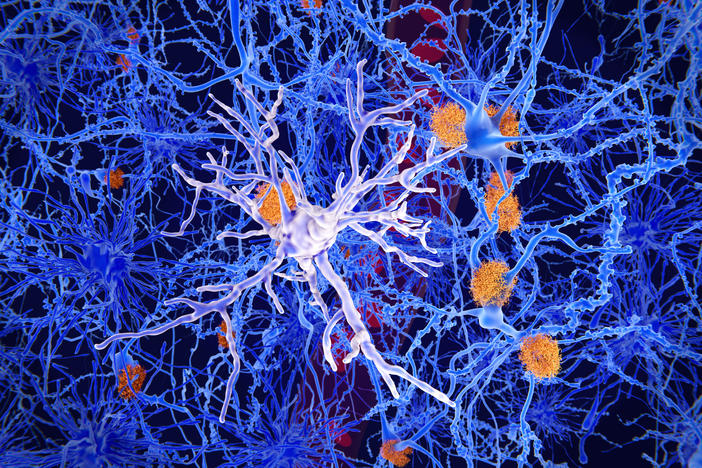
Microglia are amoeba-like cells that scour the brain for injuries and invaders. But sometimes the usually helpful cells go into overdrive and damage the brain, researchers say.