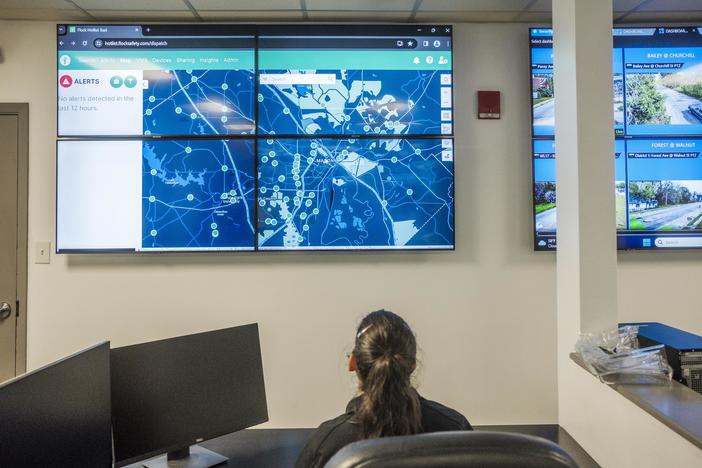
Real-time crime-center software is a sometimes overlooked but powerful tool allowing police to aggregate immense amounts of data, significantly expanding their surveillance reach.
As political races heat up heading into the midterms, candidates from both parties are increasingly joining the fray to voice concerns over Flock surveillance cameras.
Dozens of cities have canceled their contracts with Flock. Some are switching to other companies, but privacy experts say they're no better than Flock.
Maryland has one of the strictest data privacy laws in the country. But privacy advocates allege that data brokers are violating the law by selling data to police and federal immigration agencies.
In dozens of states around the country, people are vandalizing, blocking and taking down Flock cameras. A surge in such activity underscores the growing resistance to this police surveillance technology.
One of the nation’s largest providers of automated license plate readers is making changes to its platform intended to quell privacy concerns and address documented abuses of its system by some members of law enforcement.
Another Georgia law enforcement agency has flagged potential misuse of Flock surveillance camera systems by its officers. The Bibb County Sheriff’s office says its recent, monthly audit of the county Flock system returned three queries tagged as problematic by Flock’s own auditing algorithm.
A private non-profit operates over 200 cameras with live facial recognition in New Orleans. The system raises questions about privacy, legal authority and who should control surveillance technology.
A judge has forced the Atlanta Police Foundation to provide hundreds of pages of records to journalists seeking information about the controversial Public Safety Training Center in Southeast Atlanta known to opponents as "Cop City."
The Macon Bibb County Sheriff’s office is asking people who own doorbell cameras and other surveillance systems to join a new program giving officers easier access to the footage.
Australia will remove surveillance cameras made by Chinese Communist Party-linked companies from its buildings, the government said Thursday after the U.S. and Britain made similar moves.