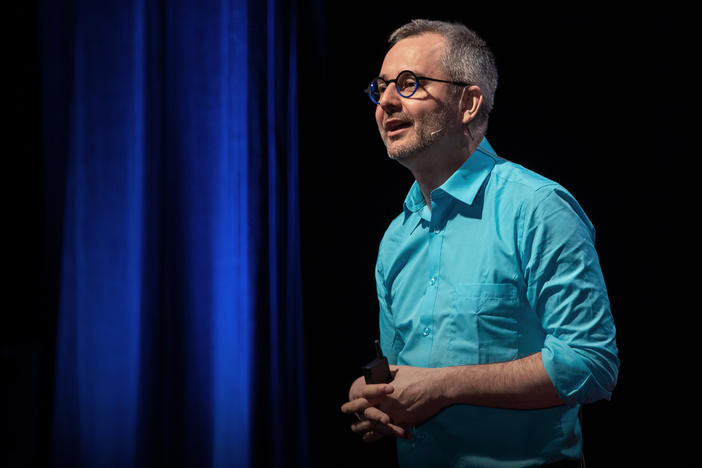
Minimalist style evokes efficiency and order... which designer Machine Dazzle finds boring and futile. He challenges us to embrace the colorful joy and abundance of a maximalist wardrobe.
We all know the feeling of choking under pressure—but why does this happen? Cognitive scientist Sian Beilock shares the science behind why we mess up in high-stakes situations... and how to avoid it.
Equestrian Kat Naud was on track to qualify for the Olympics when her 1500-pound horse fell on top of her. But the accident was only the beginning of a journey to manage pain that will never go away.
New terms — like LatinX — are often pushed by activists to promote a more equitable world. But linguist John McWhorter says trying to enforce new words to speed up social change tends to backfire.
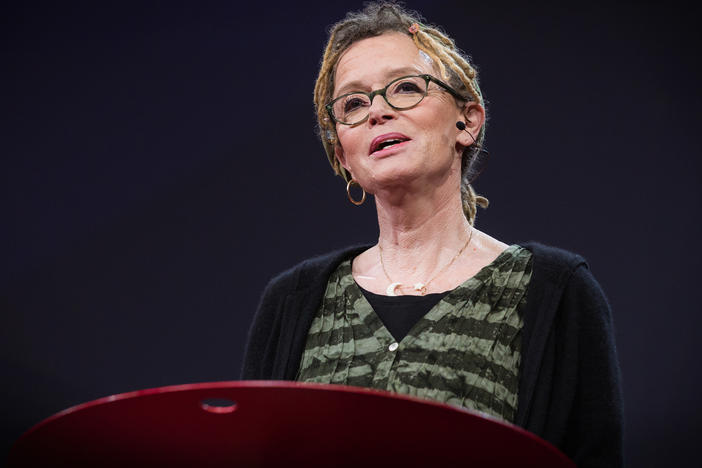
Anne Lamott has always been honest about the messiest parts of her life, from addiction to parenthood. Now, in her 20th book, she reflects on the beautiful—and complicated—realities of love.
Twenty years ago, Gene Luen Yang taught high school and wrote comics on the side. Now, he's the author of American Born Chinese and other bestsellers. He says comic books belong in every classroom.
Iranian artist Shirin Neshat is known for her images of women that pose probing questions about the female body within Islam and Iranian culture. This hour, she reflects on her life and work in exile.
Yenny Seo remembers nearly every face — that's because she is a super recognizer. She describes what it's like to live with this extraordinary ability.
We rely on technology for so much. Researcher Mike Seymour wondered: could our interactions be improved if tech had a face? He discusses how humanizing tech might make it more friendly and engaging.
Journalist Alison Killing explains her investigation in Xinjiang, China, where the government has used facial recognition cameras to track Uyghurs and detain them in camps across the region.
As facial recognition software becomes easier to acquire, businesses are using it to surveil and analyze customers. Bloomberg's Parmy Olson explains where and how the technology is being deployed.
We asked NPR's audience to share their late bloomer stories. From Antarctic scientists to zookeepers to children's book authors, there are a lot of late-in-life adventurers out there.
Retirement is a time full of new possibilities — which can be exciting and intimidating. Retired educator Riley Moynes offers suggestions for how to find fulfillment in a new chapter of life.
We often equate youth with success at work. Physicist and network scientist Albert-László Barabási put this belief to the test, and found that with persistence, we can be successful at any age.