On the August 31 edition: The gubernatorial debate schedule begins to take shape; Another district attorney challenges a new law that makes local elections in five counties nonpartisan; And a new study says people who smoke marijuana are less likely to miss work.
A new study from Valdosta State University is looking at what the invasive Joro spider eats and if it's competing with Georgia’s native spiders for the insects they rely on.
On the July 3 edition: Augusta is seeking feedback on its new data center ordinance; Plans for a boutique hotel in downtown Blue Ridge have sparked debate over the character of the city; And are Joro spiders competing with native insects for their meals?
On the Aug. 1st edition: Macon mental health advocates survey adverse childhood experiences; a bridge in Atlanta reopens after seven years; a University of Georgia study found aggressive behaviors in some Joro spiders.
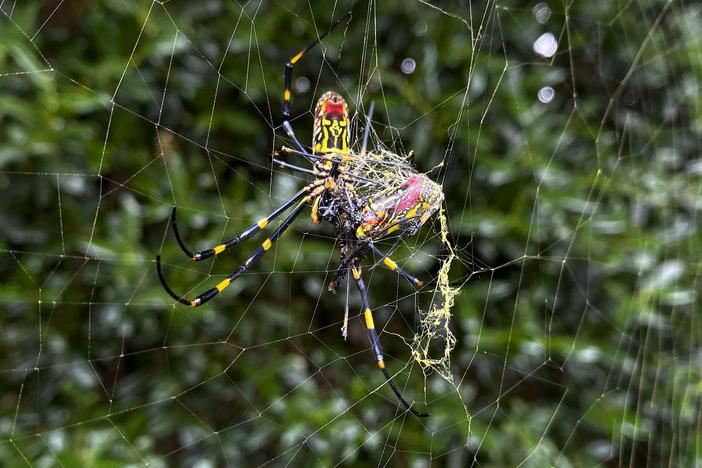
For the better part of the past decade, people in Georgia have reported seeing yellow-striped Joro spiders perched on webs. A new study from the University of Georgia finds some of the normally peaceful spider can be aggressive.
Researchers say the creatures pose little threat to humans but they are concerned about the growing prevalence of invasive species — a problem made worse by global trade and climate change.
Not much is known about the invasive yellow and black East Asian spider, but some researchers have noticed fewer sightings of native spiders since the Joro arrived in North America roughly eight or nine years ago.
Researchers say a large spider native to East Asia that proliferated in Georgia last year could spread to much of the East Coast. The Joro spider's golden web took over yards all over north Georgia in 2021, unnerving some residents.
A new study says that the palm-sized spider, which has been largely confined to warmer Southeastern states for nearly a decade, could soon colonize regions with colder climates to the north.