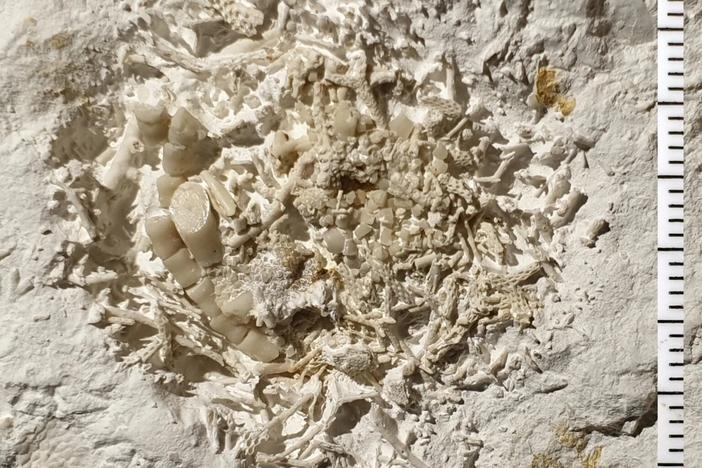
The fossil was found at a cliff in Denmark. Fossilized vomit is called regurgitalite, and it's a type of trace fossil, which tells scientists about an organism's daily life.
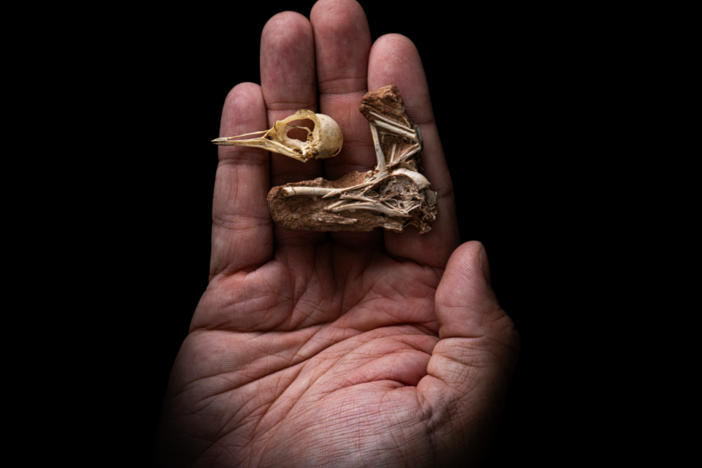
Birds descended from the dinosaurs, but researchers have known relatively little about how the bird's brain took shape over millions of years. A new fossil sheds light on that mystery.
There's an area in China that's home to a huge trove of dinosaur fossils. It used to be thought it was formed through a Pompeii-like volcanic eruption, stopping dinosaurs in their tracks. But new evidence has come to light about how it likely came to be.
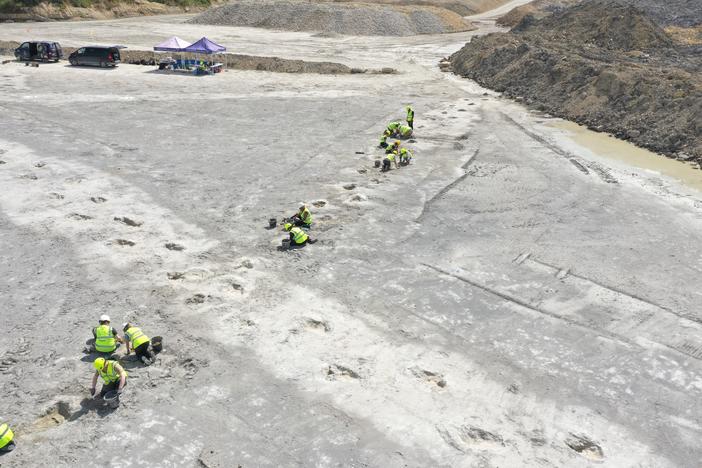
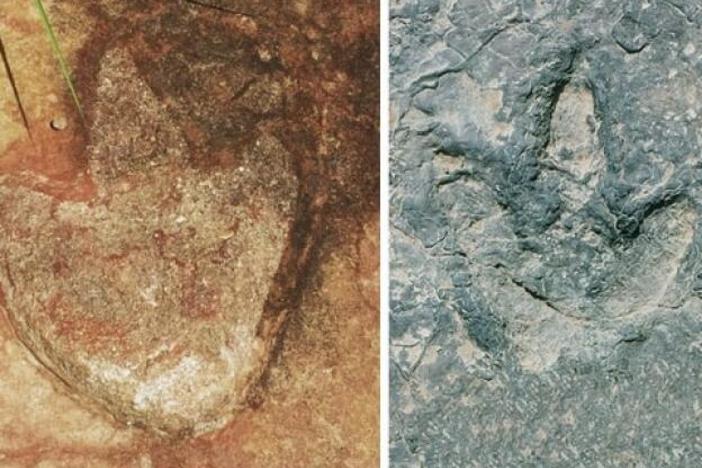
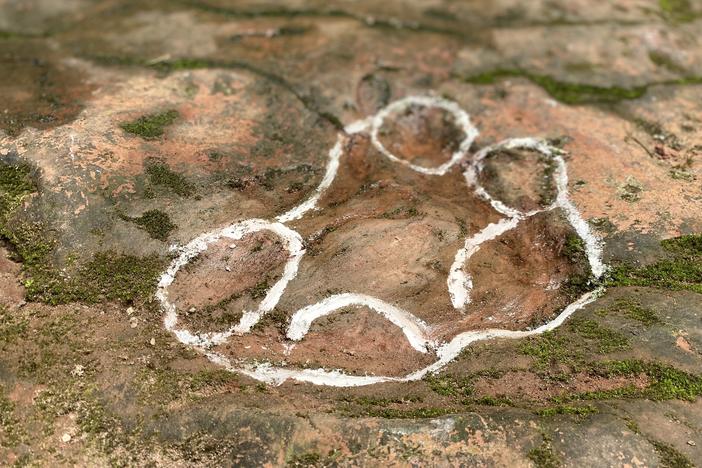
A group of scientists say in new research that matching dinosaur tracks found in modern-day Brazil and Cameroon were made 120 million years ago in an area that once connected the two continents.
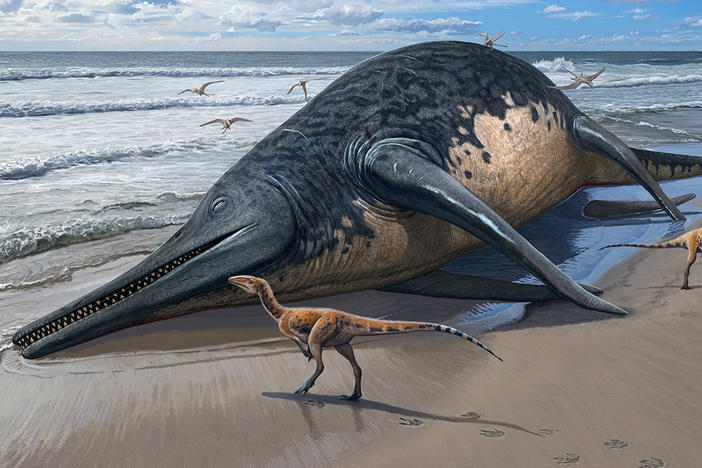
A father and daughter discovered fossil remnants of a giant ichthyosaur that scientists say may have been the largest-known marine reptile to ever swim the seas.
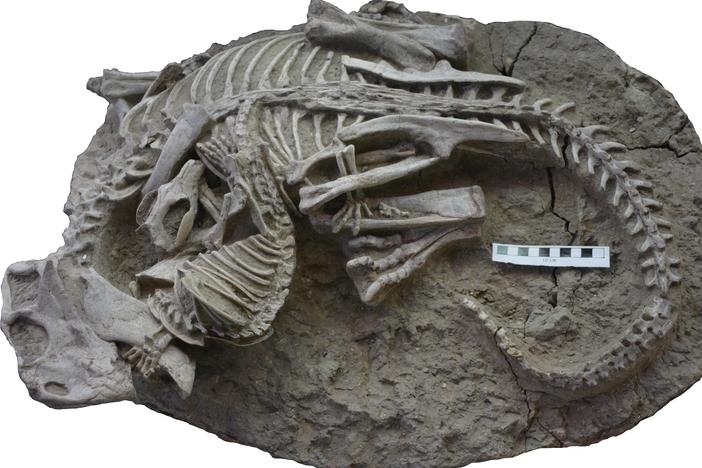
A 125-million-year-old fossil from the early Cretaceous shows the skeletons of a smaller mammal biting a larger horned dinosaur, suggesting a much more complex ancient food web.
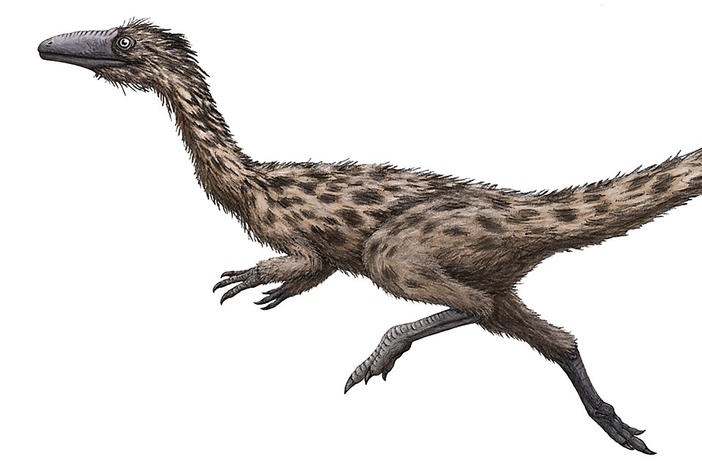
Podokesaurus holyokensis, which lived millions of years ago in what is now Massachusetts, has been named the state's official dinosaur under legislation signed into law by Gov. Charlie Baker.
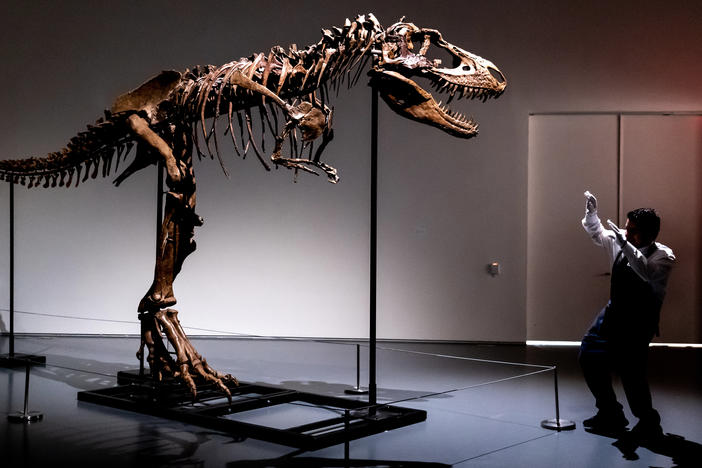
All of the other known Gorgosaurus skeletons are in museum collections, making this one the only specimen available for private ownership, Sotheby's said.
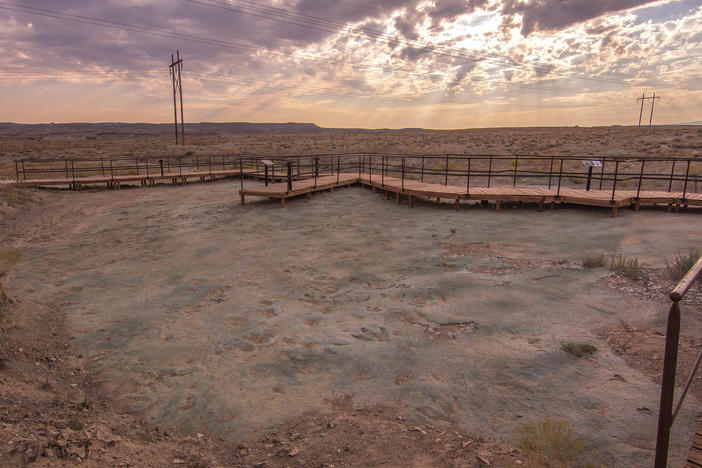
A project to replace the boardwalk at the Mill Canyon Dinosaur Tracksite in Moah, Utah, cause minor damage to tracks and trace fossils at the site, a Bureau of Land Management paleontologist found.