

Caption
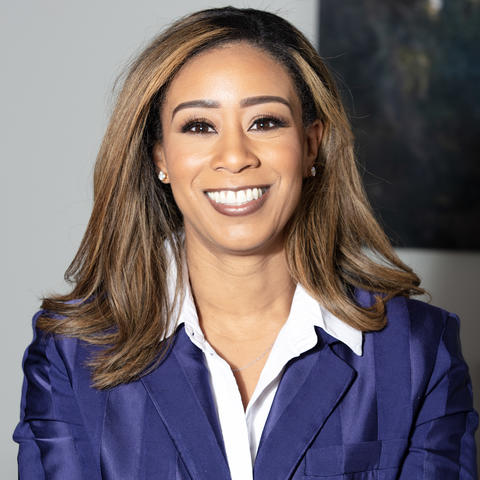
Supporters at Georgia Democratic gubernatorial candidate Keisha Lance Bottoms' election night event, Tuesday, Nov. 3, 2026, in Atlanta.
Credit: Allexa Ceballos/GPB News
LISTEN: GPB's Pamela Kirkland talks to Democratic strategist Fred Hicks as he examines Georgia Democrats' historic election sweep and the challenges facing the party as it prepares to govern.
Georgia Democrats swept statewide offices in Tuesday's election, marking a major change in the state's political landscape.
Democratic nominee and former Atlanta Mayor Keisha Lance Bottoms won the governor's race. The party also won races for lieutenant governor, attorney general and secretary of state.
Republicans have held the governor's office since 2002 and controlled every major statewide office since 2010.
Democratic strategist and CEO of The Hicks Evaluation Group, Fred Hicks points to increased participation among voters who sat out previous elections, as well as Democratic gains in rural communities.
GPB's Pamela Kirkland spoke with Hicks about what he says drove Tuesday's results, how Georgia's political landscape is changing and the challenges facing Democrats as they prepare to take office.
Pamela Kirkland: This is GPB, I'm Pamela Kirkland. Georgia Democrats are celebrating a historic election after sweeping statewide offices for the first time in decades. Former Atlanta Mayor Keisha Lance Bottoms will become the state and the nation's first Black woman governor, while Democratic Senator John Ossoff won reelection. The results mark a dramatic political shift in a state where Republicans have dominated statewide politics for years. Joining me now to help make sense of what happened is Georgia Democratic strategist and CEO of the Hicks Evaluation Group, Fred Hicks. Thanks for being here. Fred, let's start with what happened last night. Give me your reaction to what happened here in Georgia.
Fred Hicks: You know, I — I'm still just in, in utter disbelief. I thought that we would win what we consider sort of the Big 3, Big 4. I thought we'd win governor. I thought we would win attorney general, secretary of state, lieutenant governor, and I think the world thought that Jon Ossoff would win. So I put that in a separate category. But to see that, to see the margins, to see it actually happen and to see sweep across all statewide offices and potentially taking over the state House is just absolutely — I think it was unthinkable. It definitely was unthinkable and it's amazing as a Democrat. You know, Pam, we got to remember: Republicans have been in charge in Georgia since 2002 when they won the governor's mansion, in 2006 when they took control of the Legislature, and 2010 when they took control every statewide office in Georgia. And so, after a while, you just kind of tend to think about things as being that that is the norm and that is how it's going to always be when it's been that way for so long. And to see in one night — one night — all of that, go away. It's just, I mean, it almost feels surreal.
Pamela Kirkland: I want to ask you about the coalition that went into electing Keisha Lance Bottoms and some of these other Democrats who took statewide office. Where is it that you see the party making gains beyond the traditional base?
Fred Hicks: Yeah, so I think Democrats — the win was powered by a few things. No. 1: They energized their base. You know, throughout the historic early voting time period where we saw 2.8 million people vote. More than 32% of those were African Americans, the most faithful voting bloc for Democrats in the country. And that was really high. In the Stacey Abrams campaign, for comparison a couple of years ago, about 30.5% of the electorate was Black. And so we saw a 2% increase there. Secondly, we saw Democrats make huge gains with new voters, both in turning out new voters and, apparently, within that group, more than 20% of the people who voted during early voting did not vote in 2022. That is a tremendous stat. And you're talking about 1 out of every 5 voters being quote-unquote "new" or low propensity voters. And when someone new comes to polls, they're not coming to reinforce the status quo. They're coming for change. And so clearly Democrats made a big, big, big move within that group. And then also, when we look at the — the data, it looks like, given the breadth of this win, that, geographically speaking, Mayor Bottoms — now Gov.-elect Bottoms — as well as Democrats did really well in the metro core, but also continued a trend that we saw in the 2022 runoff between Walker and Sen. Warnock where Democrats started making gains in rural communities. And I think that continued in the '24 presidential when we saw the Harris-Walz campaign do its — its rural Georgia bus tour. And that played a big role in the vice president only losing by 115,000 votes. We saw Democrats continue to pick up support in the '25 special elections statewide for the Public Service Commission. We saw gains in rural Georgia and then that continued in the primary this year where Democrats outvoted Republicans for the first time since, what, 1998 or so? And a lot of that occurred of course in metro but also in these rural Georgia counties. So that — last night's election was a continuation of something we started seeing with the December runoff in 2022 between incumbent Sen. Raphael Warnock and Herschel Walker.
Pamela Kirkland: Do you think this election was more about voters embracing that message that Democrats were bringing or more about frustration with Republicans?
Fred Hicks: I think it was — it was a little bit of both. I was definitely a whole lot of frustration with Republicans. I've said this many times, that Donald Trump is the best "get out the vote" tool the Democrats have. That's No. 1. And then No. 2: If we go back all the way to his first term, people he has supported, people he's endorsed in the primary have not done well in the — in the general election. We go back to 2022 where just what every single person he endorsed in the primary lost in the Republican primary and then, of course, Herschel Walker lost to — to Raphael Warnock. And then we saw that same thing play out here. And not just in Georgia this year, but also across the country. When we look at Texas they elected its first Democratic senator in years over — over Ken Paxton who was Donald Trump's handpicked person there and we saw the same thing played out in North Carolina and other places. So — so definitely a frustration with the administration. But also Democrats were very smart to keep the focus on economic issues and not wade into the social issues this year.
Pamela Kirkland: Democrats will now get ready to face the challenge of actually governing. What do you think voters are going to be looking for from them? And what's at stake if the party doesn't deliver?
Fred Hicks: Yeah. Voters are looking for answers and solutions to their personal economic challenges. It is "the economy, stupid," as James Carville said once upon a time. I would just say it is their personal economy so people are not concerned about the stock market, not concerned, about 401ks right now. They're concerned about the pump, they're concerned about the scanner at the grocery store, they're concerned about their healthcare bills. So I think at the state level Democrats have to figure out a way to make Georgia the best place to live, to work, to raise your children, to bear children, and to retire. And right now, Georgia is the best place to do business, but it's not the best place to live. So that's the first thing the Democrats absolutely have to tackle at the state level — and at the national level — is they have to help people with their personal economy. And if they don't, we'll pay for it in '28. We're not on four -ear cycles anymore. We're on two-year cycles. And if a party doesn't get it right, they'll change. Remember, it was just two years ago in '24, the Republicans had a great day at the polls and the personal economy of Americans and Georgians got exponentially worse. And so they threw them all out and it's trying again and trying anew with Democrats. And if Democrats don't perform, I think voters will do the same thing again.
Pamela Kirkland: Fred Hicks is a Democratic strategist and CEO of the Hicks Evaluation Group. Thanks so much for joining me on Morning Edition. This is GPB.
GPB is vital. Always educational, essential, inspiring and grounding. So happy to be a supporter.