
LISTEN: Young people on the autism spectrum are more at risk when it comes to their mental health. But greater screening and individualized treatment can help. GPB’s Ellen Eldridge has more.

This story mentions suicide. If you or someone you know is in crisis, please call or text the Suicide & Crisis Lifeline at 988.

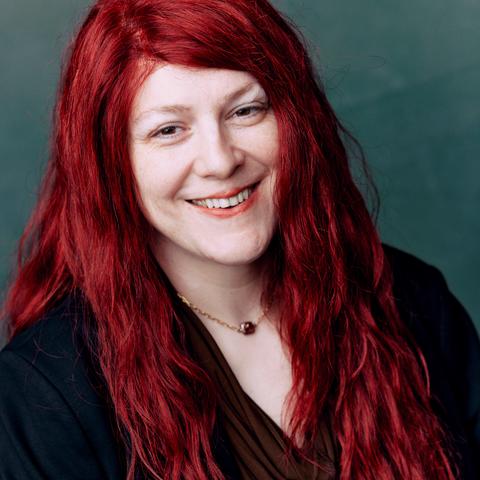
Natasha Nelson, who was diagnosed with autism in August 2023, just after her youngest daughter was also diagnosed, sits in a sensory room she uses to calm her children in her Stone Mountain, Ga. home on Friday, Feb. 14, 2025. (AP Photo/Ben Gray)

Caption

Natasha Nelson, who was diagnosed with autism in August 2023, just after her youngest daughter was also diagnosed, sits in a sensory room she uses to calm her children in her Stone Mountain, Ga., home on Friday, Feb. 14, 2025.

Credit: AP Photo/Ben Gray
Young people on the autism spectrum are more at risk when it comes to their mental health, but greater screening and individualized treatment can help, said Morganne Reid, a licensed clinical psychologist and founder of the Clinic for Autism and Suicide Prevention who works with the Marcus Autism Center and Children’s Healthcare of Atlanta. 

Depression, loneliness, bullying, and burnout put people with autism at greater risk for suicidal ideation and actions, according to a 2024 research review coauthored by Reid.

The study of 404 young people with autism found that depressive symptoms and cognitive rigidity or difficulty shifting thoughts or adapting when circumstances change, were associated with a greater likelihood of suicidal thinking. 

Specialists and suicide-treatment clinicians often work in separate systems, leaving patients and their families to understand and navigate the gaps. Additionally, standard screening questions, emergency departments and treatment approaches may not account for differences in communication, information processing, sensory needs, or cognitive rigidity, she said. 

"So we kind of need a longer-term solution because suicidal thoughts to me are communication of distress, that someone is really struggling with a part of their existence," Reid said. "So, we have to give them tools to kind of deal with that."

She added that any suicide work that clinicians are doing is really about creating hope and creating a life worth living. 

"Really, what that person needs in the moment is like a hand or a support or some kind of help rather than feeling like there's something wrong with them," Reid said. "And I hope that the stigma around suicide is starting to change."

An estimated 83,000 Georgians under age 18 are living with autism, a figure that includes people who may not have a formal diagnosis.

Support Local Journalism

GPB believes that everyone should have access to trustworthy, fact-based stories that connect them to their community and outward to the wider world. Your donation will help us in our efforts to unite and uplift Georgia.

GPB is vital. Always educational, essential, inspiring and grounding. So happy to be a supporter.

— Kelli D., Athens, Ga.
GPB’s Health Reporting is supported by Georgia Health Initiative

Georgia Health Initiative is a non-partisan, private foundation advancing innovative ideas to help improve the health of Georgians. Learn more at georgiahealthinitiative.org