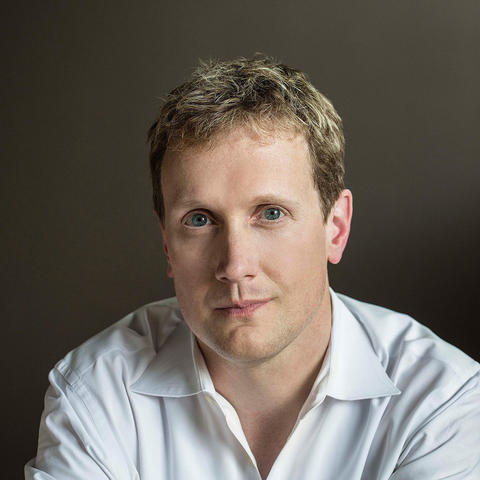


Caption
Georgia Symphony Orchestra presents "Classics 1: American Tapestry" on Oct. 10, 2026, at the Bailey Performance Center at Kennesaw State University.
Credit: Courtesy of Georgia Symphony Orchestra
GPB's Kristi York Wooten speaks with GPB classical host John Lemley to preview highlights of the 2026-2027 symphony orchestra season across the state of Georgia.
From Marietta to Rome, Savannah to Columbus, LaGrange to Augusta, Valdosta to Macon, Atlanta and beyond, GPB's City Café host John Lemley joins Kristi York Wooten to preview highlights of Georgia's 2026-2027 symphony orchestra seasons.
This interview has been edited for length and clarity.
Kristi York Wooten: September is the kickoff month for orchestras, and their calendars are filled with amazing variety of performances. GPB classical host John Lemley is here with me to talk about some of the upcoming events across the state. And many of these are kicking off this weekend. Welcome, John.
I want to start with a theory, which is that symphonies and orchestra performances are becoming some of the most human things we do together these days — with the instrumentalists playing violin and bass and horns and different instruments all made by hand and played by hands. Not that this hasn't been a thing for a long time, the digital age has existed [for what seems like] forever, but I think being in the room is becoming sort of a different experience than it was maybe even 10 years ago for seeing orchestra performances. What do you think about that idea?
John Lemley: Absolutely. We're face-to-face with other human beings, whether it's in the house or up on the stage. And it's so refreshing to know that nothing in that room at that moment, necessarily, is AI created. It's all created by human beings just like us, whether they're playing an instrument, whether they are conducting the orchestra, they're occupying the best seat in the house or they’re the ones out in the audience.
Kristi York Wooten: You and I both took a look at all of the orchestras we could find around Georgia. Outside of Atlanta, of course, there are plenty. So we're talking about the whole statewide preview for the 2026-2027 season. And what stands out to you about the orchestra seasons this year?
John Lemley: What really seems to jump out is how much ambitious orchestral music is happening all across Georgia and how different these groups are from one another. Rome, Savannah, Augusta, Columbus, Macon, LaGrange, Valdosta and Atlanta are not simply presenting different sized versions of the same season. Each has its own special character. There is also a nice balance between music people already know and music they may be hearing for the very first time. Of course, Beethoven, Brahms, Mozart, Tchaikovsky, still very much part of the picture, but also are the composers whose music was really overlooked for many years, along with composers that are writing today. That makes the season feel rooted in tradition without being stuck there. We need to remember that this is a concert hall, not a museum.
Kristi York Wooten: Right. That's a very important point, and what makes this discussion so fun is that we get to talk about each of these ensembles and the unique things that they bring to the table. So, as you mentioned, to me, someone who lives in northeast Georgia or southwest Georgia has a couple of options of where they want to go to see these performances. And, of course, Atlanta has many options, too. People can pick and choose some of these events.
Kristi York Wooten: So let's start off with the Georgia Symphony Orchestra, which is based in Marietta. Their season is kicking off on Sept. 12. And tell us what you think, what's the story with them this year?
John Lemley: First of all, the orchestra, the Georgia Symphony, is really a family of musical groups. Along with the main symphony orchestra, there's a chorus, a jazz ensemble, and even a large youth orchestra program. And that gives the organization room to do everything from traditional concerts to family programs and really big works, large works for chorus and orchestra. Two concerts show that range especially well, one they've titled "American Tapestry" and the other is a performance of Brahms' German Requiem.
Kristi York Wooten: I'm sure you've heard Brahms' Requiem many times. What makes that such a powerful piece that people keep coming back to?
John Lemley: The really interesting thing about Brahms' Requiem, a requiem traditionally is music connected with mourning the dead. Brahms goes a different direction. He chooses passages from the Bible himself, sets them in German, which was unheard of at the time, and begins with words of comfort for people who are grieving. So, even though this is a large work ... huge work for chorus and orchestra, the idea at its center is very personal, grief, memory, and of course, comfort. And because the Georgia Symphony has its own chorus, as I mentioned, that is part of the stage.
Kristi York Wooten: That's very fascinating.
See the full season lineup and order tickets here.

Kristi York Wooten: Let's talk about the Rome Symphony Orchestra because what makes them special this year is they’re celebrating their 105th season.
John Lemley: This year. The big 105.
Kristi York Wooten: In Rome, they have a full calendar of great performances scheduled.
John Lemley: Absolutely. And it's interesting and cool that the orchestra is not treating the anniversary as a long look back. They're not doing reruns, so to speak. There is Mozart and Haydn, but also Shostakovich, music by film and television composer Lee Holdridge, and a theatrical song cycle at the end of the season. So the anniversary is really about continuity and an orchestra with, yes, a long history, showing that it can still move in different directions.
Kristi York Wooten: There's also a tribute to the film and TV composer Lee Holdridge, who co-wrote the theme to Moonlighting among dozens of others in the 1970s and 1980s, as well as scored his own symphonic works.
See the full season lineup and order tickets here.

Kristi York Wooten: Next up, we have the Savannah Philharmonic and their season kicks off on Sept. 19. They have a conductor who's leaving at the end of the season, correct?
John Lemley: It is the beginning of a long goodbye for the orchestra and conductor Keitaro Harada, who is leaving his post next June after seven years with the Savannah Philharmonic to expand his horizons both across the U.S. and internationally in his home country of Japan. But there's so much to celebrate over the course of the season. The big thing is probably classical music's biggest hit, if you can say so. Beethoven's Fifth. [Sings] Bum, bum, bum bum. You know that one!
Kristi York Wooten: Mm-hmm!
John Lemley: Brahms' A German Requiem, just like we talked about a moment ago with another orchestra, is also happening, and Rimsky-Korsakov's Scheherazade. But those familiar works sit beside music by Julia Perry, Jesse Montgomery, Japanese composer Takashi Yoshimoto, and film composer Joe Hisaishi. Now, that gives listeners a comfortable starting point without making the season completely predictable.
Kristi York Wooten: Thank you.
See the full season lineup and order tickets here.
Kristi York Wooten: Let's move on to Columbus. And the Columbus Symphony Orchestra, what stands out to you about them? Their season also starts on Sept. 12. So everyone keep in mind, Sept. 12 is a magic date for orchestras around the state of Georgia.
John Lemley: It is a red-letter day and Columbus falls right in line with that. The Columbus Orchestra has a remarkable history. The orchestra actually traces its roots to 1855. This season moves between some very familiar works and some concerts built around an idea. Sometimes a country, sometimes a period of history, sometimes even one part of the orchestra, one section of the Orchestra, and that gives the season some variety.
See the full season lineup and order tickets here.
Kristi York Wooten: And what about LaGrange? They're starting Sept. 22. And I think, you know, LaGrange is one of those where people who live south of Atlanta don't wanna drive an hour or more to get to the city and have a great option right there in LaGrange.
John Lemley: And LaGrange is a good example of why a regional orchestra matters. Its own mission talks about enriching the community through music, education and performance opportunities. And you can see that community focus in the way the season is built, the way it's presented. The concert titles, "Symphony Spectacular," "Rhapsodies and Dances," "Holiday Magic" — it’s hard to believe the holiday season's coming up! — "Symphony Superheroes," and "Musical Revolutionaries." All of these titles suggest ways into the orchestra to sort of pull the audience in through storytelling, like we've discussed before, from a traditional night out — family programming and concerts that are built around a theme.
See the full season lineup and order tickets here.
Kristi York-Wooten: And now Augusta: They start on Sept. 25. And I know you talked about a concert that features Michael Daugherty's Raise the Roof. And the solo instrument in that is the timpani. Can you talk a little bit about that?
John Lemley: Right. We don't very often hear of a percussion instrument acting as a soloist. In rock and roll, we do all the time. The large drums, the timpani, stationed at the back of the orchestra is what we're accustomed to. Augusta's principal timpani player, Dr. Dennis Petrunin, gets in to step into the role normally occupied by a violin or a piano soloist. And it really changes the way you listen to an instrument that is usually part of the background structure. Suddenly, those drums are telling the story.
Kristi York Wooten: And Augusta's also doing this Georgia premiere of James Lee III's Piano Concerto in A, and there's a pianist involved in that. Is that Jeffrey Beagle?
John Lemley: Jeffrey Beagle. A concerto, of course, simply a piece that puts a solo player in the conversation with the orchestra, in this case, the piano. What is smart about the program is that this new piece is not set apart as something audiences need special preparation for. It sits right alongside music of Samuel Barber and Edvard Grieg. The message is simple: New music belongs in the same room as music we've heard all our lives.
Kristi York Wooten: That's a great statement. And I know last year we talked about Amy Beach, and they've got her Gaelic Symphony, which is also an American story that the Library of Congress has identified as the first symphony composed and published by an American woman.
John Lemley: Which is big news. And the striking thing is how naturally Beach's music fits beside the rich, sweeping orchestra, orchestral music that people already know from the late 1800s. So the question becomes less, why are orchestras playing Amy Beach now? And more along the lines of, why did audiences have so few chances to hear this music for so long? She died in 1944.
Kristi York Wooten: Right, and one thing I think is important when we talk about orchestras is people's fear of boredom, people's fear of not being familiar with the music. So a lot of us go to rock concerts, country, pop because we know the songs and we want to convene with the songs as much as we do with the artists and performers who are bringing them to us. And I think in the symphony we do that in the same way, when we kind of rely on our familiarity with these great classical compositions that everyone knows. But we really should try to get more comfortable with experiencing something new, even if it's an older piece that is new to us. And how brave it is of some of these symphonies to keep making sure that they do bring us those opportunities.
John Lemley: And this is why a number of orchestras and ensembles will pair something not as familiar with pieces that we're very familiar with.
See the full season lineup and order tickets here.

Kristi York Wooten: Valdosta Symphony Orchestra kicks off a little bit later, and they're doing something really fun. They're doing Frankenstein with a live orchestra and of course a week before Halloween. Tell us a little more about that one.
John Lemley: This is a great example of a familiar movie becoming a completely different experience in a concert hall. Valdosta is going to, as you say, screen the classic 1931 Frankenstein film while the orchestra performs Michael Shapiro's score live. And there is this wonderful historical twist. The original film was released without a full, continuous musical score, and Shapiro's score was written decades later specifically to accompany this film. So the audience gets to hear very clearly how music can change the way an image feels. Of course, Valdosta's leaning into Halloween. Costumes and other fun things as a part of this event, but underneath a very good lesson in how much music shapes the way we experience a movie.
Kristi York Wooten: Especially with a classic like that. Absolutely. This may be the first black-and-white film some of this audience sees.
See the full season lineup and order tickets here.
Kristi York Wooten: As of now, Albany has not announced its season, but check its website for updates here.
Kristi York Wooten: All right, let's move on to the Macon Mercer Symphony Orchestra. Of course, the Mercer's McDuffie Center for Strings is a big part of this. A combination of Mercer players and students perform with the Macon-Mercer Symphony orchestra. So their season kicks off on a Monday, Sept. 21, and what are some of the musical highlights they've got coming up for this year?
John Lemley: Case Scaglione is conducting the opening concert with a violin and cello soloist in Brahms' "Double Concerto." This is a piece that puts two instruments front and center, both violin and cello in the solo spotlight. The program also includes Prokofiev's first symphony that's known as the "Classical Symphony." He's sort of paying tribute to the composers that came before him, Mozart and Haydn and the like. Prokofiev himself said that he imagined what Haydn might have written if Haydn had been alive in Prokofiev’s own time. So he uses the shape and manners of an 18th-century symphony, but you keep hearing Prokofiev's 20th-century wit poking through.
Kristi York Wooten: And he was kind of that bridge for a lot of styles, anyway. Most people know, tell us a few, I can name them, but I want you to name them … some of the Prokofiev pieces that everybody doesn't realize they know already.
John Lemley: Well, there's one we hear a lot around the holiday season because it comes from a wintery scene and it is the “Troika” from Lieutenant Kije, his incidental music for the production. And Prokofiev really has this knack of painting a scene. And that's why over the years... If we were to play the Troika, people would immediately recognize it, but, you know, it's an unusual name, both the work and the composer, too.
See the full season lineup and order tickets here.

Kristi York Wooten: And last but not least, the Atlanta Symphony Orchestra has a really enormous season this year with a lot of programming and some new things, some different things, and we'll just jump in with more Brahms. So Brahms is kind of the leading figure throughout a lot the programming in the symphonies for several of the orchestras as we've mentioned. So tell us about "Brahms Revealed," which is something that they're doing.
John Lemley: Well, after the orchestra's Beethoven project, Natalie Stutzmann, the conductor, is spending this season looking closely at Brahms. All four symphonies, all of his concertos, a German Requiem, and even more besides that. The advantage of hearing that music by one composer across a season is that Brahms stops being just a famous name. You begin to notice connections from one piece to another. You hear his writing style that carries from one work to another, almost like reading the whole book, say, instead of just one chapter.
Kristi York Wooten: Some other things about the symphony that people may not know or haven't yet learned is the Atlanta Symphony Orchestra, the Atlanta Symphony Orchestra Chorus is and has been world-renowned. I mean, when Robert Shaw was the conductor.
John Lemley: He came in 1967.
Kristi York Wooten: So the '60s through the late '80s was his peak period. And of course, toward the end of the '80s and early '90s is when the Atlanta Symphony Orchestra was winning a lot of Grammy Awards. And primarily because of Robert Shaw and this impressive chorus that continues today to be, to me, one of the really most important aspects of any. I love the instrumental performances, but the chorus gives it this real depth.
John Lemley: And the orchestra, through its recordings, actually, I don't think this is any stretch of reality. They actually put the Telarc label on the map. Telarc, the recording label, had been around for a while, Ohio-based record label, but when Robert Shaw and the chorus and orchestra began to record for them, it was a whole new world.
Kristi York Wooten: That's a fun fact that I often repeat, because so many folks, especially in the South, but anywhere in America, who have CDs from that era, they've bought it for the composer name or whatever the piece is, and then they look and they see, "Oh, it's by the Atlanta Symphony Orchestra." So check your collections at home, and you will see that ASO is probably among them. Also, there's a pianist who's coming to be the artist-in-residence at ASO. You want to tell us about her?
John Lemley: Yes, Anna Geniushena is the orchestra's artist-in-residence, which all that means is that she returns several times during the season instead of appearing for just one week or one concert and then disappearing for a while. She is scheduled to play three piano concertos. So the listener will get more than one chance to hear how she approaches some very different music.
See the full season lineup and order tickets here.
Listen to the weekly radio program The ASO ON GPB.
Kristi York Wooten: John, what are you most excited about based on what we've talked about today in terms of what's coming to these stages across Georgia?
John Lemley: Well, the way I look at this is a chance for the concert goer to expand their horizons. And not just from a music standpoint, but also from a geography standpoint. What I think would be really cool is if someone living in Atlanta takes what we've and decides to make little trips across the state, maybe make a weekend out of it, and take in the Lagrange Symphony Orchestra or the Rome Symphony Orchestra, experience an ensemble that is not in your own city, and consequently those living in Rome, Lagrange, Augusta, they take a look at the Atlanta Symphony Orchestra or the Georgia Symphony Orchestra and decide to do the same to make a little trip whether it's a day trip or as I say make a weekend out of it and experience what metro Atlanta has to offer. It gives you a better more well-rounded picture of what this amazing state has to offers from a music standpoint.
Kristi York Wooten: Thank you so much, John Lemley, for joining me to talk about the symphony orchestra season across Georgia. So, I guess the bottom line is, check out an orchestra near you.
John Lemley: Right, so many opportunities to enjoy live music, which there's nothing like it. You can listen to recordings nonstop, but nothing is like hearing live music in a concert hall.
GPB is vital. Always educational, essential, inspiring and grounding. So happy to be a supporter.