

Caption
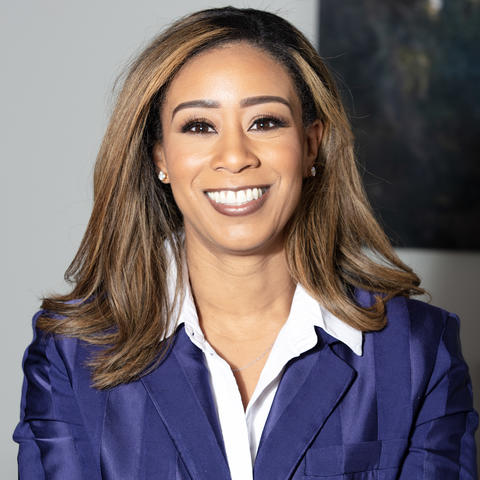
Pat Mitchell addresses guests at National Jewish Health’s 2026 Legends of Atlanta Gala on Sept. 2 at the Woodruff Arts Center in Atlanta.
Credit: Pamela Kirkland / GPB News
LISTEN: Award-winning journalist, producer and media executive, Pat Mitchell reflects on some of the risks that defined her career and why she is now focused on climate justice.
Ask Pat Mitchell how she feels about being called a "pioneer," and she'll tell you it conjures images of the pioneer women of another era. Legend, icon, groundbreaker—all terms that come loaded with baggage, she says. Mitchell has spent decades breaking new ground, from her early days as a reporter and anchor to her time as president of CNN Productions to her role as the first woman to lead both PBS and the Paley Center for Media. On Wednesday, National Jewish Health honored the Georgia native at its 2026 Legends of Atlanta Gala.
Mitchell grew up in Swainsboro, Georgia, in the 1950s, when the only paths open to girls in the rural South were, in her words, "very limited." She credits a grandmother and an eighth-grade teacher with pushing her to want to pursue more. That push carried her to the University of Georgia, where she was a freshman alongside Charlayne Hunter-Gault and watched, up close, what the civil rights movement demanded of the people living it. While teaching English in Athens, Mitchell invited her students to join her at a civil rights march that local officials had declared illegal. Several came, and they were arrested together. At the jail, one student’s father approached Mitchell to thank her.
“You just made my son care about something,” he told her.
She says that encounter made her wonder whether she could reach people on a larger scale.
Most recently, Mitchell co-founded Project Dandelion, a global, woman-led climate justice campaign. It grew out of a conversation with former Irish president Mary Robinson, who convinced her that every cause worth fighting for depends on a habitable planet.
Mitchell joined GPB's Pamela Kirkland in the studio ahead of the gala to talk about all of it.
Pamela Kirkland: It's GPB. I'm Pamela Kirkland. Pat Mitchell has spent decades creating opportunities for others. She rose from reporting and anchoring to become president of CNN Productions, then the first woman president and CEO of both PBS and the Paley Center for Media.
Along the way, Mitchell became known not only for breaking barriers herself, but for helping other women move through them. Today, the author and Georgian native continues that work through TEDWomen and Project Dandelion, a global woman-led climate justice campaign. And was recently honored for her accomplishments by National Jewish Health at its Legends of Atlanta Gala. And Pat joins me now. Thank you so much for being here.
Pat Mitchell: It's wonderful to be here. I love being back in the studio.
Pamela Kirkland: So first of all, congratulations on this honor. I was told your husband says you don't like being called a legend necessarily. Is he right?
Pat Mitchell: Um, you know, all those words come with so much, um, baggage or reinterpretations, or pre-interpretations. Legend, icon, oh, the one I really don't like is pioneer. I always get that image of, you know, the woman in the long flower dress walking alongside the wagon. Although, thank goodness we had pioneer women. Nonetheless, grateful for it.
Pamela Kirkland: You grew up in rural Georgia. Grew in Swainsboro. When you think back to when you were a girl, could you have imagined having done all of this?
Pat Mitchell: Oh, goodness, no. My boundaries were very limited. If you grew up as a girl in the South in the 50s, as I did, I mean, you just didn't have many opportunities. And so we always saw ourselves within a certain path, but it never felt like the right path for me. And I had a grandmother who encouraged me to go outside those expectations and expect a lot more of myself. And then I had an eighth-grade teacher, you know, one of those mentors, who began to help me believe in my own dreams and then find the pathway towards them. You know, getting a scholarship, getting to college. So I could not have been here or anywhere else without those people who early, early on believed in me and gave me that little push we all need, just so you don't have to fit into anyone else's definition of what your life can be.
Pamela Kirkland: There was also a lot going on. It was the age of the civil rights movement, also the women's rights movement. How did those shape your transition from teaching to eventually getting into the journalism track?
Pat Mitchell: Those two social justice movements totally shaped the rest of my life. And you know how fortunate, in many ways, I would have come of political age at the time when this country was going through such dramatic and important changes, and at the University of Georgia to be in that freshman class with Charlayne Hunter-Gault, who happened to live in my dorm. So we became friends, and watching the struggles that she went through and understanding that at some deep, personal, friend-to-friend basis, as well as having grown up seeing the injustices everywhere. That really activated me in a way that has remained a very real part of all my work. And then the women's movement was starting, too, and that came at a time when I, as a young married woman, had to face a divorce, which was very unheard of in the South. So that movement also gave me the kind of wind beneath my wings, you know, as I was thinking, 'what is possible for me with these two dramatic changes going on,' and 'how can I be a part of them?' And being a part of them really shaped the rest of my life.
Pamela Kirkland: Was there a difference for you in teaching about movements like that versus reporting on them and actually writing about them?
Pat Mitchell: Such a good question, because I was really good at teaching about them for sure, and I did have- can I just share a quick episode with you that would, that really I think says everything about that? I was teaching my freshman and sophomore English students about all the great justice movements and using literature as a way in for them, of course, and the civil rights movement was holding a march in Athens, Georgia. It was, of course, against the law. It had been declared illegal for anyone to participate in that march. But I said to my students, 'I'm going to be there on Saturday morning, and if any of you want to join me, fine.' And some of them did, and we all got arrested. And we're in the Clarke County jail, and I see a red pickup truck come flying into the parking lot. A man gets out, and I think, 'Oh dear, It's some student's father, I'm sure.' And he walks over, and he asks for me, and they point to me. We were all in a kind of holding pen. And he walked over to me, and I think he's gonna hit me, because he had that look on his face. But instead, he put out his hand, and he said, 'You know, I wanna thank you, young lady. You just made my son care about something.' And so then I thought, wow, okay, activating students is a very big responsibility. I mean, I am asking them to do something that's illegal; they got arrested, all that responsibility. But it also felt like if I could do that with one student, how could I do that in a bigger way? And that's what led to the writing and television.
Pamela Kirkland: In the 1980s, you left a secure job at NBC to start "Woman to Woman." Did it feel like a risky decision for you at the time?
Pat Mitchell: Very. Everyone. In fact, my agent fired me. My agent said, 'If you're going to make that kind of dumb decision, you're gonna leave a big network job while you're on this fast track to go and start a show and syndication about women. No, no.' He said, 'I really can't represent you anymore.' So when I went to do "Woman to Woman," I actually didn't have representation for the first time in my career in media. But, yeah, I knew it was a risk, Pamela, and I can't say that I took it frivolously because I had a son, you know, still the sole supporter. But I also, by that time, like most of us, I had enough confidence in what I knew how to do, and I had a lot more experience. So I thought the worst is I can get another.
Pamela Kirkland: Your work today includes Project Dandelion, which is a global campaign that puts women at the center of climate justice. What made climate change feel like the issue that demanded your attention right now?
Pat Mitchell: I was working with women leaders all over the world in a group of forums that we call Connected Women Leaders, and we put these women in a room who didn't know each other but who had different levels of leadership all over the world, and we give them a problem, and they would come up with some new idea and innovation. And in that process, I had met the former president; I actually already knew the former president of Ireland, the first woman president, Mary Robinson. Because I had done a documentary on her when she ran for the presidency in 1990, and we'd stayed in touch. And she was in one of these groups, and we were trying to look at global health and what was going on challenges due to the climate crisis. We were looking at food insecurity and then, of course, the nature and climate emergency being felt everywhere. And Mary stood up and she looked at all of us around the table and she said, 'You know, no matter what your issue is, whether it's rights for children, rights for refugees, whether its food security, farming, whatever you are fighting in your life to make better, we have to have a habitable, healthy world in order to do that.' And that just clicked for me. I thought everything I have tried, and spent time and energy focused on trying to change and make better, had to have a healthy environment in which to nourish it. So that's why Project Dandelion became the culmination of all that connected women leaders' work.
Pamela Kirkland: Pat Mitchell is co-founder of Project Dandelion and this year's Legends of Atlanta honoree. Thank you so much for speaking with me in the studio. Thank you very much for your time and the good questions.
GPB is vital. Always educational, essential, inspiring and grounding. So happy to be a supporter.