Jonesboro, Roswell, Marietta | Flag Football: Week Three
Banner Image

Section Branding
Header Content
Episode 808: Classroom Engagement and Attendance: The Key To Getting Students in Seats
Primary Content
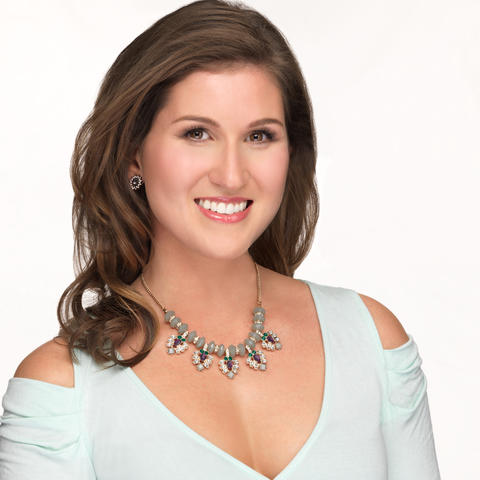
In the Season 8 finale, core and elective English teacher Rionda Bell visits the podcast from Hillgrove High School in Cobb County School District to tout a vital component to student attendance. Getting students in seats is not just a metric of student presence at school, but also of student engagement in the classroom. Bell reveals her personal "song and dance" for fostering a desire to come to class, which combines high-energy instruction, supportive relationships, and real-world course applications.
Ashley Mengwasser:
Eight episodes into season eight. The time is nigh, I'll say with a sigh, to tidily retire our season focusing on the topic of student attendance. We've learned from a district that excels at attendance, spoke to state leaders at DOE's Pivotal Attendance Summit, buoyed up the Teach in the Peach recruitment effort through apprenticeships, promoted educator wellness and were humbled by one high schooler's vulnerable chronic absenteeism story. But there's one more angle still to examine before we disperse this season. And our season eight finale starts now.
Greetings educators, it's a Classroom Conversations finale here at GPB Studios. Who brought the Scotch…tape, the Scotch tape, to affix this memory to our podcast scrapbook? I'm host Ashley Mengwasser. It's been a thrilling eighth season of Teacher Talk on the platform for Georgia's teachers presented jointly by your education content experts at the Georgia Department of Education and Georgia Public Broadcasting.
As we conclude a serial discussion about student attendance, we want to provide one more key to help unlock the portal to student presence in your classrooms. And that key to getting students in seats is student connection to instruction, better known as engagement. Our season eight finale covers how to get students to want to come to class. Let me introduce a fabulous final guest with no issues in this department. From Hillgrove High School and Cobb County School District, we're joined by English teacher Mrs. Rionda Bell. Rionda has her gifted endorsement and teaches both core and elective classes at Hillgrove. Welcome to the podcast, Rionda.
Rionda Bell:
Thank you Ashley for having me. I'm so excited to be here today.
Ashley Mengwasser:
I'm glad to have you and by the way, with the best earrings I have ever seen on a podcast guest. What is the story of these?
Rionda Bell:
Thank you. So last summer I had the pleasure of taking a girls trip to Kenya. We went to visit one of our friends who had relocated out there while there, we definitely took some shopping days into the markets. And so these earrings came from there.
Ashley Mengwasser:
I love them.
Rionda Bell:
Thank you.
Ashley Mengwasser:
You came expressly recommended to us, Rionda. How's the end of the school year treating you now that you're looking back almost at the very end?
Rionda Bell:
So the end of school year is pretty much like every year. They say the years are long but the days are fast. That's a school year. The days are long and the year is fast. So when we look back-
Ashley Mengwasser:
Blurs by. Yeah. And 2026, this is a big year for you too. I want to build to this first though. So how did you first get on the pathway to English instruction? When did you decide I'm going to be an English teacher?
Rionda Bell:
So it's a story. I did not think that I wanted to be a teacher when I went to college. I did go to major in English. I went to Albany State University, Go Rams, and I majored in English and I had the dream of being an entertainment lawyer. I saw it.
Ashley Mengwasser:
Yes. I still see it.
Rionda Bell:
Yeah. I saw it. I wanted the power suits. I saw it.
Ashley Mengwasser:
Power earrings.
Rionda Bell:
All of it. But when it came time for senior year, I just didn't feel ready. And I graduated and I got a job with a cheerleading company. And when I spent time there and my grandmother, who was an educator, she said to me, "You should take some education classes." And I remember I was like, "Oh, Nana, I don't know if that's really for me." And she was like, "Well, during your downtime, go back, maybe start working on your masters, take some education classes." And I did and I remember feeling left out because everybody in my classes actually got to leave class and go teach. And I was like, "That's not fair. I want to go. I want to go."
Ashley Mengwasser:
You had FOMO.
Rionda Bell:
Yeah, big time. So after that I went and I got involved in youth cheerleading program at an elementary school. And then from there I got into the district as a paraprofessional. From there I started teaching special education. Then I got my gifted endorsement and I came over to English
Ashley Mengwasser:
Always at Cobb County?
Rionda Bell:
Always at Cobb County. I'm a graduate of Cobb County Schools myself. So it was a dream to be able to come back and teach there.
Ashley Mengwasser:
I love everything that you just shared. Also an English major, also former cheerleader.
Rionda Bell:
Oh, yes.
Ashley Mengwasser:
Yes, have hosted several of GHSA's cheerleading championships for GPB. But what's cool, I think about your story, you're not the first person this season who actually listened to their grandmother's advice to become an educator. So you should go hear some of those other episodes because grandmas are coming in hot. But now you're working toward your doctorate, which is the pinnacle for an educator. How does that feel and how's it going?
Rionda Bell:
So that feels great. It feels amazing. I defend next month.
Ashley Mengwasser:
Next month.
Rionda Bell:
I'm super excited. Speaking of grandmothers, my grandmother actually had her doctorate degree and it was kind of always a dream to follow in her footsteps with that. And so she's since passed away, but I look at her picture almost daily, especially when I'm writing papers to get me through.
Ashley Mengwasser:
She's a reminder. Are you planning a power suit to defend your doctorate?
Rionda Bell:
Ooh.
Ashley Mengwasser:
This could be an opportunity.
Rionda Bell:
I've thought about it. But yeah, this could be the opportunity. Actually, I might have to look into that.
Ashley Mengwasser:
You might get to channel a lawyering moment there. Absolutely.
Rionda Bell:
It feels like defense, power suit. Yeah.
Ashley Mengwasser:
It's coming together.
Rionda Bell:
It is. I like it.
Ashley Mengwasser:
You have quite a busy life, right? With this doctorate, you have children, you're a mother, you did cheerleading for years. What's going on in your life with the extracurriculars you're supporting through your family?
Rionda Bell:
Like you said, crazy life. I'm always busy. If it's not a paper I'm writing, we have two sons. One just start a big boy job. He's moved to New Mexico. He's working in finance out there. Our baby, he's nine and he is involved in all the things. So he plays baseball. He plays chess. He plays basketball. He now wants to get into soccer. He just does all the things and keeps us busy nonstop. So I love it. I wouldn't trade it for anything.
Ashley Mengwasser:
He keeps you on the field.
Rionda Bell:
Constantly.
Ashley Mengwasser:
I love it. And this girl's trip to Kenya also sounds pretty amazing.
Rionda Bell:
Oh gosh.
Ashley Mengwasser:
Earrings notwithstanding. You got to go with your closest friends and experience another country. Any takeaways from that? I've never been.
Rionda Bell:
So I will say it was not what I expected at all. The weather was amazing. It was perfect. I did not expect it. It was never hot. It was never cold. It was just perfect. I'm going to tell you, I had the best Thai food I've ever had in my life.
Ashley Mengwasser:
In Kenya.
Rionda Bell:
In Kenya. Yeah. It was great.
Ashley Mengwasser:
Both of those things were unexpected. What time of year did you go?
Rionda Bell:
So we went last June.
Ashley Mengwasser:
It was summer in Kenya.
Rionda Bell:
Actually, they were heading into winter.
Ashley Mengwasser:
Oh, that's right. Not a geography major, as you could see.
Rionda Bell:
Me either.
Ashley Mengwasser:
Okay. I have to tell our audience, Rionda, some of the things that have been overheard in your classroom, whether from your students or from you, and I want you to tell me and our audience if this was you who said this, if it's attributed to Rionda or to Rionda’s students. So here's the first thing. You really like your job. Who says that?
Rionda Bell:
So that would be my students.
Ashley Mengwasser:
You really like your job.
Rionda Bell:
Yes. They say that quite often. Ms. Bell, you really like your job.
Ashley Mengwasser:
What are they observing when they tell you this?
Rionda Bell:
So I like to tell my students that this is my stage and I like to have a good time. And so when I come into the classroom, I don't like to be bored. So I do a lot of entertaining. We sing, I dance. Okay. I said we. I sing. I dance.
Ashley Mengwasser:
They watch.
Rionda Bell:
Yeah, they watch. Sometimes I might... You never know. I might stand on a desk in order to give instruction. You just never know what you get from me.
Ashley Mengwasser:
It definitely keeps them alert in there.
Rionda Bell:
They have to. They better be.
Ashley Mengwasser:
And I think you've definitely teased up the next quote here. "I'm not going to bore you. Don't bore me."
Rionda Bell:
That would be me. 100%. For me, that's what I tell the kids. I'm very lively. I have a coworker down the hallway. She says that she'll hear me doing my thing and she tells her students, "Oh, it's okay guys. It's just Ms. Bell."
Ashley Mengwasser:
Mrs. Bell doing Ms. Bell.
Rionda Bell:
Ms. Bell being Ms. Bell. And then I have another coworker who's right next to me. She says that one of her classes is always like, "What are they doing over there? Why don't we get to do what they're doing?" I'm like, "Oh gosh guys, you have no idea."
Ashley Mengwasser:
You've given us a great teaser for today's topic. So I'll lead into this. In what ways would your students describe you as engaging? It sounds like sights and sounds are on point.
Rionda Bell:
Absolutely. So I do think my students would say Ms. Bell is very dramatic, quite theatrical. She keeps things lively. Actually, my students would say, "Ms. Bell is so messy." But I try and tell them, "I'm not messy guys. You tell me things and I just listen. So actually I'm just a good listener."
Ashley Mengwasser:
You're a good listener. Exactly right. And you teach students in a multitude of courses. What are the courses you teach at Hilgrove High?
Rionda Bell:
Okay. So this year I had the pleasure to teach Honors Lit Comp 3 and then I teach a on level Lit Comp 3 class. I teach a co-taught Lit Comp 3 class and then I teach what is a speech and sociology class and I teach the speech section.
Ashley Mengwasser:
Okay. Forensic speech, right?
Rionda Bell:
Forensic speech.
Ashley Mengwasser:
And that's a combo course. Out of the courses you just mentioned, are students required to take those classes which are core and which are considered elective?
Rionda Bell:
So all of the lit comp three classes are core and then the speech class is an elective.
Ashley Mengwasser:
What are they learning with you in each of these classes? I'm particularly interested in the forensic speech and sociology, which you say is co-taught. How does that format work with the other teacher?
Rionda Bell:
So it's very interesting. I love it. The class is an AB class. And so we typically have about 60 students in our class and I'll get half of the class and she gets the other half in the sociology part. And so on one day they come to me, I'll have one group come to me, she'll have the other group come to her and then the next day we switch.
Ashley Mengwasser:
Awesome.
Rionda Bell:
And then whenever we have major assignments, major speeches, then we bring all 60 students into my lovely little classroom.
Ashley Mengwasser:
And that class they're getting special credit for or tell me how that works.
Rionda Bell:
So they get two credits. They get two academic credits for that class because it's social studies and English. So they're academic electives and they're-
Ashley Mengwasser:
Academic electives.
Rionda Bell:
Academic electives, yes.
Ashley Mengwasser:
Nice.
Rionda Bell:
And it goes towards their whole GPA.
Ashley Mengwasser:
Okay. Well, no wonder they're invested. What are they learning with you in forensic speech on that part of it?
Rionda Bell:
So for speech, we really take time to... We start off with setting a community within the classroom. I like to tell students that I have to establish a family culture within the classroom because I have students on different levels as far as their comfort levels for speaking in front of crowds. So I spend about the first two weeks of school just really establishing a family culture because I have some students who get very nervous when they get in front of people and speak and I have some who are extremely comfortable.
Ashley Mengwasser:
Like Mrs. Bell.
Rionda Bell:
Yes. Actually, yes. And so we spend a lot of time building them up and really exploring who they are as people and how they see themselves and how others see them. And so we take time to do that, but they learn how to do public speaking. They learn presentations skills. We'll do dialogue. We'll do debates. We do extemporaneous speaking. So they learn a variety of styles of speaking, whether it's very formal or informal.
Ashley Mengwasser:
I'm going to read the list you told me, if that’s fine. You said interviews, debates. You mentioned extemporaneous speaking, how to have dialogue, how to have productive conversations. I didn't expect this one. Ranting. Describe the skill of ranting.
Rionda Bell:
Okay.
Ashley Mengwasser:
I think we all know it. Yeah. But what's it look like in an academic setting?
Rionda Bell:
It is during my persuasive unit. And so I teach them that a rant, you shouldn't just be using word vomit. Okay? If you are going to be an effective ranter, you need to have very effective persuasive skills because whatever it is that you're saying or ranting about, you want to get your point across, but you want people to really hear what it is that you're saying. And essentially you're kind of trying to convince them of something, of whatever your strong feelings are. So we talk about persuasive skills and we talk about how to incorporate those into a rant and they could choose something a serious topic to talk about or they could choose something that's very not serious. I don't know, ketchup doesn't belong on a corn dog or whatever. I don't know.
Ashley Mengwasser:
As long as they demonstrate the skill they can choose. I love what you said about your students really run the gamut. They represent a lot of different archetypes of students.
Rionda Bell:
We do.
Ashley Mengwasser:
What are some of those archetypes you have in there?
Rionda Bell:
So I have the very strong-willed students. I have students who, like I said, I can give them a topic right now and they'll stand up and they will give the most mind-blowing speech because they're really good at saying things in a way that's going to make you listen. But then I also have the student that is extremely shy that the thought of getting in front of a group just makes them break down. I have students who are ready to cry and so we have conversations like that's fine because actually for you, I'm going to see a lot of growth. And in my class I spend time teaching my students about presence and what it means to have presence in front of a group. And my students, they learn how to power pose.
Ashley Mengwasser:
Ooh, what is that?
Rionda Bell:
Yes. So we take a look at Amy Cuddy's TED Talk where she talks about having presence and she gives different examples of power posing and then we go and we look at examples of power posing in current pop culture and television shows, especially Grey's Anatomy loves Amelia. She loves the power pose.
Ashley Mengwasser:
She does the arms akimbo.
Rionda Bell:
She does.
Ashley Mengwasser:
I love Amelia.
Rionda Bell:
And so we show those and then we practice power posing and they're required to get that one power pose that they can use, whether it's going into a job interview or if you have to do a speech. And so students, after we learn that many times they will come to me before a speech and they're nervous and I'll say, "Hey, go take a moment, step outside and hit your power pose and then let's get together." And I'll tell them, I tried it myself and I said, "I'm not going to give you anything that I don't feel like works." And it works amazing. And even to this day, I've had students come back to me years later and they'll mention power posing or they'll tell me, "Oh gosh, I had a speech at my college class and I hit that power pose before I went in." And so that's always something that makes me feel really happy.
Ashley Mengwasser:
They are working it, thanks to Mrs. Bell. I love this sector. You mentioned you also have student athletes in your course who are just interested in learning if they go on to compete further when they graduate in athletics, how to speak publicly.
Rionda Bell:
Yeah. Athletes often, especially if they go on further or even on the high school level, many of them have to get and they have to speak in front of a camera, whether it's on Friday night lights or whether it's on a podcast or whether it's in front of alumni or anything, they have to speak to people. So I've had a class where it's very heavy athletes and we kind of talk about that, like how this skill can be transferable for you past just this class and how can you use this on the next level when you go to the next level. So that was very interesting.
Ashley Mengwasser:
In terms of engagement, I understand why students would want to come because they get those credit hours and this course directly applies to life past high school. What do you notice that's different in terms of engagement in core classes that you're required to teach, versus the elective?
Rionda Bell:
Yeah. So I think one of the major things is the elective class, kids are choosing to be there whereas the core class, they have to take the class. Also in my core classes, I have a lot of students who come in and their confidence may not be the best because we're dealing with reading, we're dealing with writing or their strengths are in math and science. And so it's like, ugh, they come in immediately with English and it takes a lot of selling of the content in the core class to really get them to buy in to what it is that I'm trying to teach them. So whereas the elective class, when they come in, they expect for it not to be as stressful. They're like, oh, they may come in and like, "Oh, this is an elective." Not realizing, "Oh wait, but she's really going to put us to work." But you're having fun while doing the work so you don't even realize that it's real work that you're actually doing.
And like you mentioned, they can truly see... It's easier for me to sell this class as something that they can use past high school and so it's meaningful to them and I feel like that truly helps with the engagement. My class for the elective class, we tend to have, like they get to choose their seats. They can switch up if they want to. It's not as, I don't want to say structured, but not as structured as a core class might be.
Ashley Mengwasser:
Also, what I think is interesting though, just knowing you is you're thinking about that application past high school. Like you said in your own words, you're selling it. I imagine you're selling English too. I am. And you've got a little bit of an uphill battle there. You talked about when your students come to class, they kind of sometimes have some of them an ick reaction to the core class and one of the things you said you're battling is in high school, student apathy.
Rionda Bell:
Yes.
Ashley Mengwasser:
Tell me about that and how you deal with that in a core class to help them stay engaged.
Rionda Bell:
Yeah. So I do feel like in the core class more so than the elective class that we're dealing with a lot of student apathy, but similar to the elective class, my level of energy remains the same. So they come in and immediately they know like I'm on, I'm the teacher, oh, it's your birthday up, we're singing a birthday song, which kind of gets them to understand that I care about them. Many times when you have students who are dealing with that apathy, once they realize, wait, you care that I pass and you care about your job, you're not just here because you're getting a paycheck, like you really want to see me succeed, then I feel like a lot of times you can tap into, "Hey, listen, I know this is a struggle." Or I'll tell them, "Listen, I understand that you don't like English. That's okay. I don't like math."
Ashley Mengwasser:
You're not trying to change that about them.
Rionda Bell:
No. And I tell them, "It's not my goal that you leave here an English teacher. I would love for you to leave here and absolutely feel like Their Eyes Were Watching God is your absolute favorite book ever in life,like mine. However, that's not my goal. My goal is that you develop your critical thinking skills. My goal is that you leave me a better communicator and a deeper thinker than you did when you came in to me."
Ashley Mengwasser:
Since we're talking attendance, what do you notice in terms of attendance in your elective versus core? Do you have to really push to get students there in the core or is it because they're getting the Mrs. Bell special, you got them there every day because they know what's on the menu.
Rionda Bell:
Yep. My attendance tends to be pretty full quite often.
Ashley Mengwasser:
Applause for that.
Rionda Bell:
Thank you. And I don't know if it's the Mrs. Bell Special. I like to think so that they come and they know, but I'm also wanting to let them know, listen, when I have a student who's absent, the next day they come back, the first thing I say is, "Hey, I really missed you yesterday." I want you to understand that I see you and when you're not here, I notice that you're not here and I do want you to be here. And anytime I have to reach out to a parent and talk to a parent, I'm very intentional as well to let that parent know, please let them know that I miss seeing them in class.
I want to see them in class and if there's anything I can do, please come and talk to me. And so it's really big... Relationships is so huge to me and I feel like there's so much that we can get from students once they've realized that you genuinely care. And one thing I learned a long time ago is that students, they are very aware. They can read through fakeness.
Ashley Mengwasser:
Fake. Right?
Rionda Bell:
Yeah. So they can read through it and students will know, you really care about me or no, you're just acting right now. Somebody's in the room so now you're acting like you care. Versus, nope, she really truly cares about me and so I'm going to give her a little more effort.
Ashley Mengwasser:
I've heard you say that relationships are key to engagement. I've heard you say that selling the material in the modern lens that they can appreciate is key to engagement. How does Hillgrove keep the elective classes relevant? I'm wondering how we listen to students and offer classes and strategies that appeal to them.
Rionda Bell:
I feel like our students are very vocal. Our principal, she has an open door policy for students that they can come and they can talk to her about things that they're interested in. Our students will let us know. I have an amazing department chair who listens to students and listens to us. And so even right now, looking at the English electives, my department chair is putting together a team to look at our electives and to see what other things can we offer to students that are academic electives, but they're things that they would be interested in and things that they can use past high school. And so I feel like that's really important and we listen to the conversations that students have. Students are constantly talking about what's going on in school, what they're not getting. And the beautiful part about the speech class is because they give so many different types of speeches, they have many opportunity to express their feelings and thoughts and experiences, whether with school, with life, what it is that they want.
And then I can use that information and I'll go to my principal and say, "Hey, listen, this is what my kids are talking about in class about what's going on at school, or this is something that my kids are talking about that they feel like they're missing out on." I get a lot of student feedback and I feel like we have a school that's very open to that.
Ashley Mengwasser:
Yeah. You know your audience because you've asked, you invite that feedback.
Rionda Bell:
I do.
Ashley Mengwasser:
And you keep them engaged in your classes by giving them a platform to be authentic and they learn that. If you could just leave us, Rionda, with one or two of your marvelous teaching strategies that a teacher could employ in a core class or an elective class, what would you say, "Hey, teachers do this or try that."
Rionda Bell:
Take the time to get to know your students. Many times we want to jump right into content and for me it's really hard to jump into content and I don't know you. So I feel like take the time to get to know them, take the time for them to get to know you as well. That's one of my things that I like to do at the beginning of the year. Also, I go and throughout the class, I go and I'm going to sit down at your table with you. I'm all about... I love collaboration. So I'm really big on collaboration. I think it helps students to think through their ideas before they have to share out in front of everyone as well as they can hear and bounce ideas off of other students. And during that collaboration time, I love to go around and sit down with my students and let's hear what you're talking about.
I love to ask them about what they're involved in, what their thoughts are about all kinds of things. And so collaboration is really good. I have a wonderful co-teacher in my co-taught class. We have an amazing relationship. I've been at my current school, this is year 11 and she and I have taught together for 10 of those years.
Ashley Mengwasser:
Wow.
Rionda Bell:
Yes. And so that's something that I say to administration, when you have strong teams, don't break them up.
Ashley Mengwasser:
Oh, that's good.
Rionda Bell:
And so she and I, because of how well we work together, she and I do a very good job with bouncing off and she may notice that something going on with a student that I might not notice. So if you have a strong team, let's keep our teams together. And then I think-
Ashley Mengwasser:
I can give you one that you told me that I think is so inspiring. You said something to the effect of, it's good to be anomalous. It's good to have a talking English class. It's good to have a loud English class, which seems antithetical, right?
Rionda Bell:
Yes, yes. So yes, as I've said throughout the episode, yes, my class is a talking English class. I don't believe in a quiet English class. To me, I need to hear your thinking. I need to hear your thoughts. And again, I need for you sharing out. I feel like English classes, you should be reading, you should be writing, but you also need to be talking.
Ashley Mengwasser:
And if you're Mrs. Bell, you're also playing music because that's another great bridge to students meeting them where they are.
Rionda Bell:
Yes. I always have music going on. I love to play soft music. I love to play lo-fi music jazz when students are working and it could just be my brain, but sometimes I'll keep it really, really low because some students get distracted very easily. And so I'll keep it really, really low just so that we have kind of that white noise going on in the background. But I've seen students who they've come to me and said, "Hey, where's the music?" And I'm like, "Oh, sorry. I don't have it on yet. Didn't realize you paid that much attention." But that's something that's real. Students are paying attention even when we don't realize it.
Ashley Mengwasser:
And they expect that structure.
Rionda Bell:
Yes.
Ashley Mengwasser:
Well, this is our season eight finale episode, Rionda. You're getting the last word. What do you want fellow teachers to know about student engagement and core and elective classes help keep their students engaged?
Rionda Bell:
So guys, I'm going to tell you, I tell my son on the baseball field when he goes up to pitch, have fun. Teaching is such a hard profession, but it's so rewarding and I think we have so much that's constantly going on. And at the end of the day, these are your babies and take care of them, nurture them and have fun with them.
Ashley Mengwasser:
Mrs. Bell, you were the perfect spirited guest to bring us to a grand close on our quest to get students in seats, attentive, interested and engaged. I can definitely tell you that student engagement is your strong suit.
Rionda Bell:
Oh, thank you.
Ashley Mengwasser:
And I hope you agree. We can never repay you, but thank you for being here today on Classroom Convos, your first podcast, right?
Rionda Bell:
Yes, my first podcast. I can check this off my bucket list. Okay.
Ashley Mengwasser:
She did it. And she went to Kenya and got fabulous earrings. All right. Audience, that's all she wrote. Thank you, Mrs. Rionda Bell from Hillgrove High School. As we part ways temporarily, remember our credo. You're a great teacher. We at Classroom Conversations see you and love what you're doing to impact your students. Great teachers help learners resist chronic absenteeism along their learning journey by keeping them engaged. We may be banishing absenteeism from our topical shortlist, but I can assure you this episode isn't the end of our educator-centered discussions on this podcast series. We have at least one special episode already waiting in the wings for you and a couple more coming your way that I know of. It's been a pleasure connecting with you from behind the mic. I'm Ashley. On behalf of everyone behind season eight at GPB and Georgia Department of Education, thank you and goodbye for now.
Secondary Content
Author
Bottom Content